

Barbie is pro-men
Barbie doesn’t tell men what they want to hear: It tells them what they need to hear.

*I don’t know if what I’ve written pertains to actual spoilers but to be on the safe side, read at your own discretion.
I went to see Barbie on a whim last week. It was probably because of the relentless advertising and finally giving into a bout of boredom that I took the plunge and went for it. The cinema was packed and as soon as the credits rolled the entire cinema followed suit when some film student (I guess?) began clapping. I’d never experienced anything like it, especially because I hardly found the film memorable or particularly worth applauding over. On a side note, the artificial sense of “community” fostered by the Barbie film and its worldwide promotion – from Spotify playlists to the viral Barbie Pink Frappuccino – is a hollow testament to how we’re striving for meaningful connections via postmodern consumerism. There was a sense of “We’ve achieved something together here!” in the post-film applause that was nothing but a temporary high.
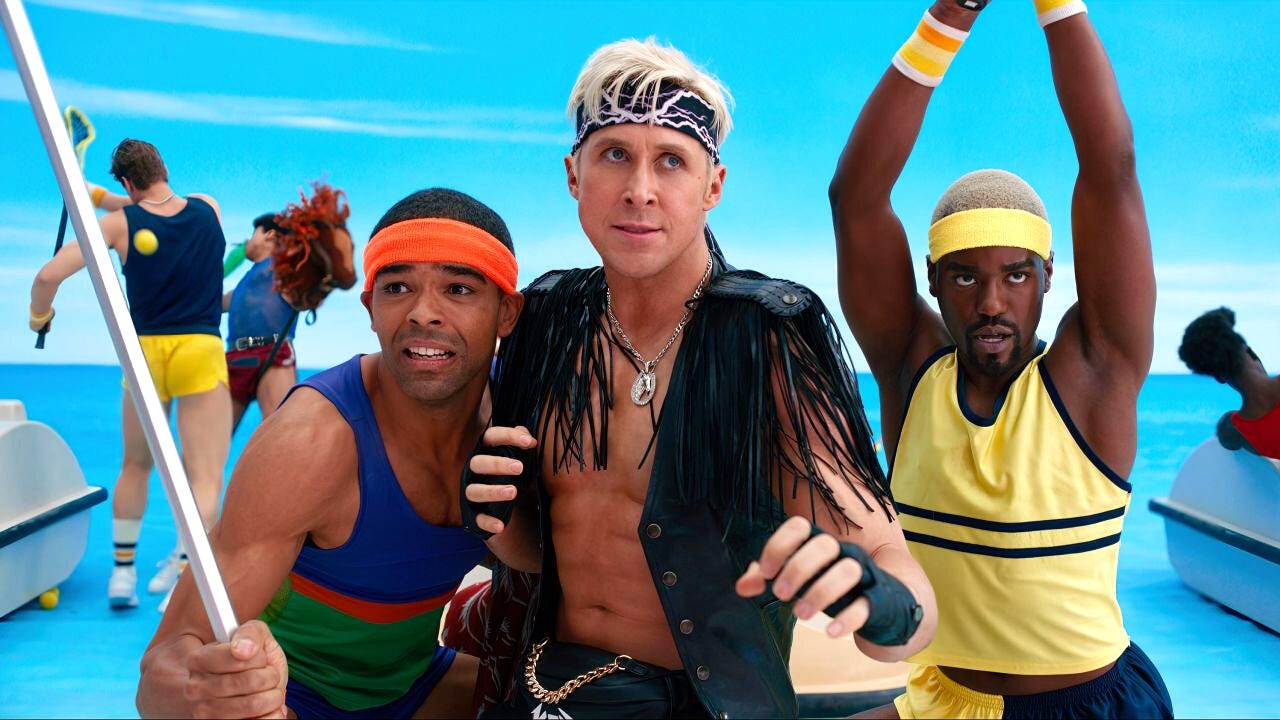
But being a postmodern consumer of Barbie did make me appreciate one thing: The film, rather poetically, forefronts the dilemmas of modern men in the various manifestations of Ken. As the counterpart to Barbie since 1961, Ken and Barbie are essentially the inverse of Adam and Eve: Ken’s existence is contingent on Barbie, and, as such, all his meaning derives directly from her. The film did an obvious job of showing this in having Ken (in all his variations) relentlessly seeking validating and meaning from Barbie (in all her variations). Her success was his success and, therefore, his worth was entirely reduced to hers. Not only did Barbie take his relationship to her for granted but she also depended on it to give her meaning in whatever role she embodied.
One of the most important scenes, in my opinion, was when we see how stereotypical Barbie (played by Margot Robbie), and as such every variation of Barbie, choses “Girls’ Night” over spending the night with Ken because “Every Night Is Girls’ Night!” The one thing which gives him significance - being seen as a worthy individual in the eyes of Barbie - essentially rejects him every single night, making it clear that Barbie doesn’t require Ken to have a good time or, importantly, to live. Young, modern men are lost when it comes to finding meaning beyond modern women either as something to strive toward or to project their insecurities onto. This is nothing new. Young men have always depended on women as a right of passage into manhood, to garner a sense of worth and meaning either in understanding their own masculinity or in competing with other men for it. The common denominator has always been women and their utility as an integral cornerstone to what it means to be a man.
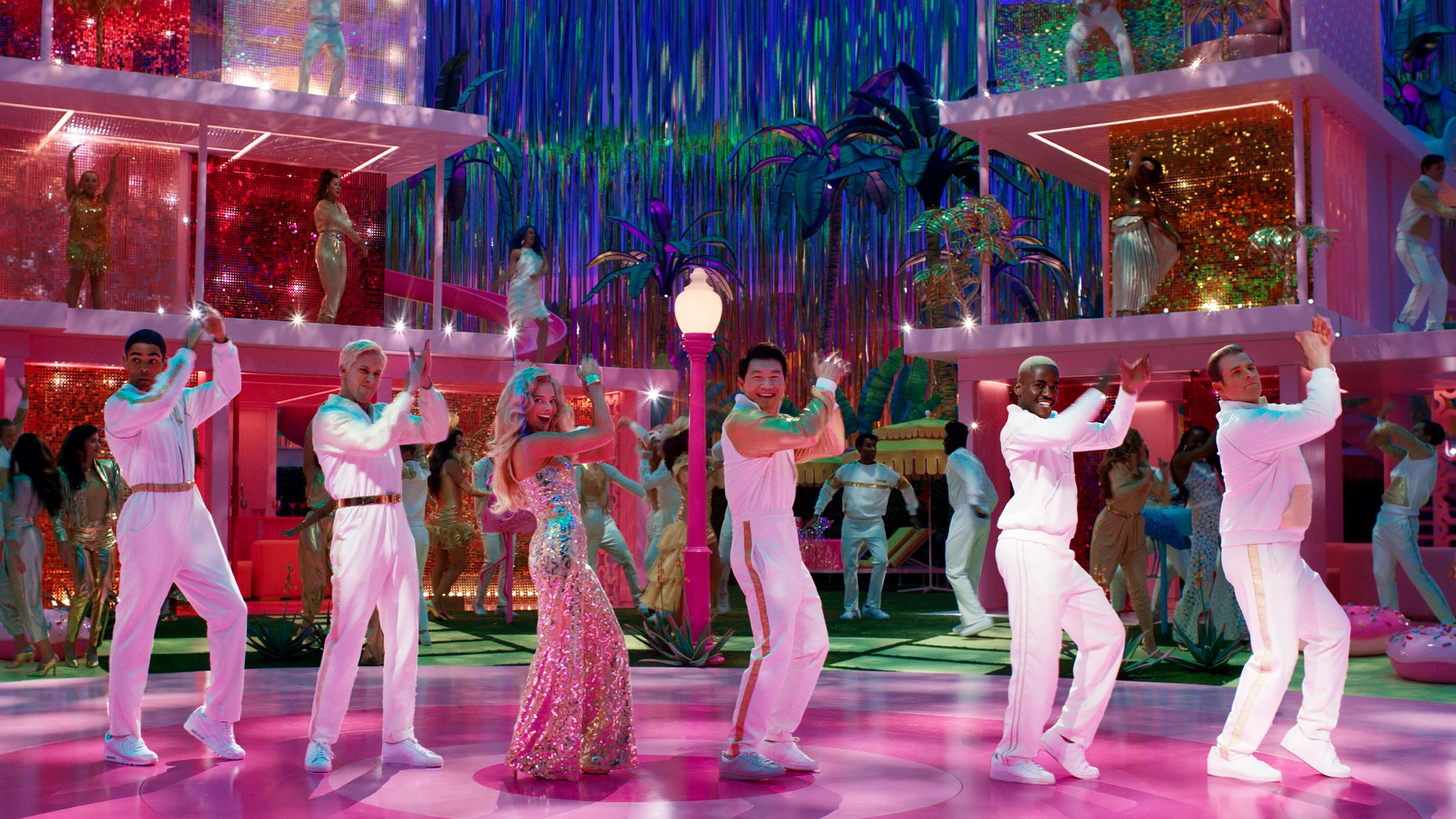
Barbie showed how stereotypical Ken (played by Ryan Gosling) embodies the young, modern man coming to the realisation that the young, modern woman he garners (and has historically always garnered) his sense of identity from has no genuine interest in him as a necessary component to her dream life and story. She is a modern woman, finding and discovering herself in a world where women – and Barbies – strive for perfection, feminine ideals and literally going to the ends of the earth to reverse the dreaded realities of ageing. Ken doesn’t feature in her story similarly to how, increasingly, men-as-a-necessity don’t feature as readily and urgently in the lives and stories of (young) modern women.
Stereotypical Ken does what a lot of young men have done when faced with the sudden realisation that beautiful and young women aren’t like the ideal sold to them by the legacies of their fathers, grandfathers, and pornography. He turns against that which he feels wronged by: He turns against beautiful and young (modern) women. This realisation has been difficult for many young men to fully grasp in a world that is already no true friend to him. Real modern women are brains before they are bodies, including the women who comply with self-objectification in advertising, on social media and in explicit content: The self-objectification of modern women in sex work and online isn’t done for men inasmuch as it’s done for profit (and, increasingly, their own profit), capitalising on men’s greater susceptibility to boredom in a modern world that values feminine qualities in both public and private life.
Ken represents the young, aimless modern man who is, basically, bored. He is bored and therefore follows Barbie into the real world. He seeks thrills and adventures; the ultimate escape from his boredom in a world that doesn’t value him as Ken. Sadly, there’s no porn, OnlyFans, or Instagram in Barbie Land so what’s a guy to do?! I’ve personally noticed time and again that modern men are very bored in the service economy where most physical labour has moved abroad (or, as Ken sees it, modern Kens have no horses). In Barbie, as in real life, “Patriarchy” is discovered and propagated because it kills two birds with one stone: It allows the Kens (and men) the dual opportunity to turn against that which represents the greatest threat to their insular understanding of their own masculinity – Barbie (and modern women) – as well as infuses their creation of “Barbie-and-modern-women-as-enemy” with a pseudo-spiritual meaning. It isn’t that the Kens or Red-Pilled men hate women per se: They just have exclusive knowledge and understanding of what’s best for men and, therefore, by default, what’s best for women and society at large. As Andrew Tate said in his most recent interview with Candace Owens, men are “the warrior class at the end of the day. It’s going to boil down to the men who are going to stand up and actually do something about anything at some point…”.
And that is precisely what stereotypical Ken does.
But what the Kens and the Manosphere get abysmally wrong is their mutual obsession in deriving their sense of masculine worth from their enemy. “Patriarchy” only makes sense with women, and a “warrior class” only makes sense if it’s doing what warriors do: conquering an enemy, destroying an enemy, and controlling an enemy. That’s where the story ends for both the patriarchal Kens and the Manosphere. The latter have absolutely nothing of sense to say about what men can do with their lives and themselves when they leave the sexual marketplace; that is, for the vast majority of their lives existing and figuring things out beyond their sexual market value. The Kens have no idea about anything that isn’t about horses, mink coats and lounging around with their Barbies. It’s a fantastical masculinity that isn’t really masculinity but a convenient, temporary distraction from the realities of how hard, complicated and unpredictable life is. The important thing about control over women and one’s enemies is that it permits the controller a rare sense of agency that is often conflated with genuine agency.
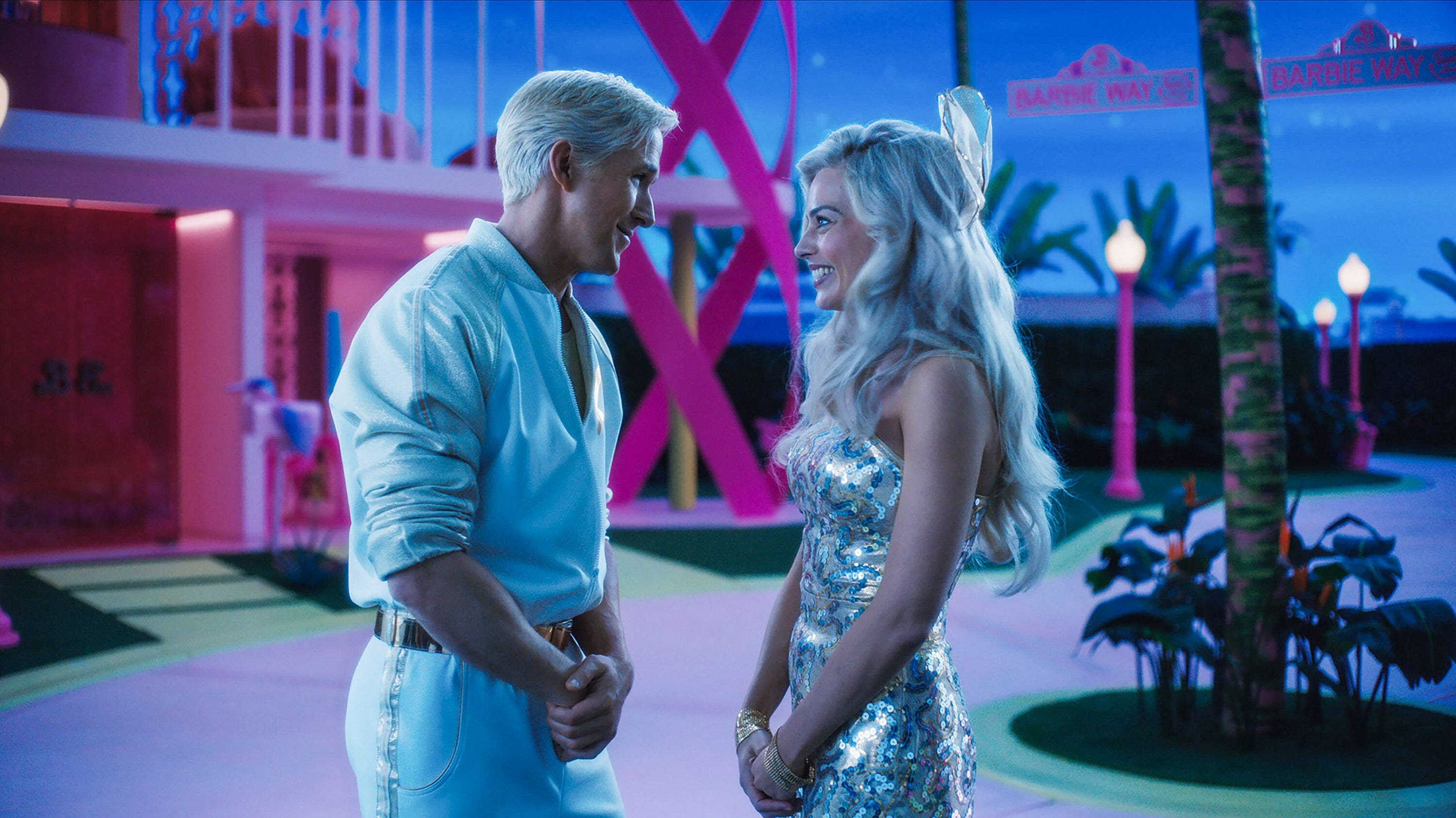
The Barbie movie did something that the Manosphere has not yet come close to doing, and this is why I’m convinced that it is pro-men (and rightly so). Barbie doesn’t tell men what they want to hear: It tells them what they need to hear. Stereotypical Ken is forced to reckon with his insecurities, his projections, and his lack of truly knowing who he is or wants to be. He’s obliged to do this because he isn’t truly fulfilled or fuelled with purpose in the “Patriarchy”. There are only so many horses that can fill the void before they’re simply sucked into it! What is of the utmost importance is his acceptance that discovering and understanding who Ken is will probably be a lifelong endeavour riddled with more downs and wobbles than the easy way out in the form of defining himself via “simping after” or having “control over” Barbie. All the Kens are acknowledged as Kens whose existence and purpose has been contingent on the Barbies and their world. Barbie Land ignored the Kens as individuals in their own right up until the final scene; something which, in the modern world, political feminism has suffered from for decades now. Barbie acknowledges Ken, his feelings and his struggles without condescension, ridicule, or disdain. She apologies for taking him for granted, for not appreciating his humanity; but, crucially, she does not and will not save him. She will not be his Eve (whether in saving him or being blamed for damning him), and he will have to find his own way to his own identity.
This isn’t a happy ending for the Kens, but it is the ending they and all young men need. There is no past to yearn for and there’s no women willing or obliged by patriarchal mores to save men from themselves and the world. Young people generally lack the insights of philosophy books, the use and encouragement of their own cultivated critical thinking, and an education that isn’t stuck in the stalemate of the industrial era and its marketable demands. Men are noticeably suffering dearly as a result and therefore tend to look for gurus and earthly Gods to rescue them when women can’t. Unfortunately, you are the only one who can save you. You are the only one who can give your life meaning, and that is a very difficult and scary thing to come to terms with. As Nietzsche, the main culprit of this mess, wrote rather ambiguously:
God is dead. God remains dead. And we have killed him. How shall we comfort ourselves, the murderers of all murderers? What was holiest and mightiest of all that the world has yet owned has bled to death under our knives: who will wipe this blood off us? What water is there for us to clean ourselves? What festivals of atonement, what sacred games shall we have to invent? Is not the greatness of this deed too great for us? Must we ourselves not become gods simply to appear worthy of it?
Barbie is pro-men because it understands the plight without coddling the sufferer. Our society needs to empathise with men in ways that it most definitely hasn’t. But it also needs to inject philosophy – the questions, conversations, meanings, and dilemmas it reckons with and unites us in – into an expanding idea of masculinity; a masculinity that isn’t universal but that, at its core, is you and of your design.
Thank you for taking the time to share a thoughtful piece. Whether agreeing or disagreeing, it is excellent to share ideas and remain kind of respectful of people. Thank you for exposing yourself to the negative side of the Internet. I am not sure yet what to think of the other comments. The messaging is a bit confusing, but I am going to side with optimism at the moment.
Looking forward to more discussions of ideas.
Interesting essay. I watched the movie yesterday and I felt like it was trying to tell a story that I didn't really understand and this was an insightful read on it.
I'm not sure how intended that view is given that Barbieland is "the opposite of the real world" according to the movie, I think inside the movie, the men in "the real world" still have the power, still hate sexually harass women and make them feel unsafe, are servants but also beneficiaries of capitalism, etc... but even if it isn't intended it's a good reflection.